How well is your control panel being maintained?
Industrial control panels are often expected to operate continuously for many years. Because the equipment may still be running, it is easy to assume that everything inside the enclosure is in good condition. In reality, electrical connections can loosen, contactors and relays can wear, ventilation can become restricted, and contamination can gradually affect the reliability of sensitive control equipment.
Consider a few important questions:
- When was the panel last properly inspected by a competent electrician or automation technician?
- Are its protective devices in good condition and suitable for the connected equipment?
- Have emergency stops, safety sensors, guards, interlocks and other safety-related devices been functionally tested?
- Has the panel ever been modified, and were those modifications properly designed and documented?
- Could any safety feature have been bypassed to keep production running?
- Are wiring diagrams, device settings and cable identifications available and up to date?
If the answers are uncertain, the panel should not simply be ignored until the machine stops. Preventive inspection provides an opportunity to find developing faults while maintenance can still be planned.
What should preventive control-panel maintenance include?
The exact inspection depends on the machine, the electrical system, its working environment and the manufacturer’s requirements. Work inside an industrial panel should only be carried out by competent personnel using appropriate isolation, testing and safety procedures.
A planned inspection may include:
- A visual check for overheating, discolouration, damaged insulation, corrosion, contamination and loose or unsupported wiring.
- Checking terminals and electrical connections using the correct procedures and manufacturer torque information where available.
- Inspecting protective devices, contactors, relays, power supplies, cooling fans, filters and other components for damage or excessive wear.
- Functional testing of emergency stops, safety switches, sensors, interlocks and control functions as part of the machine’s overall safety assessment.
- Checking enclosure seals, cable entries, ventilation and ingress protection against the actual site environment.
- Reviewing PLC, HMI, inverter and controller fault histories, settings and available backups.
- Confirming that cables and devices can be identified and traced during future fault-finding.
- Recording findings, recommendations and any work completed.
Where original circuit drawings are unavailable, the technician should begin recording the panel’s layout, device references, terminal information and key circuit details. A complete drawing package may require additional engineering work, but even structured documentation is far better than leaving future technicians with no reliable information.
Warning signs that servicing may no longer be enough
Not every ageing panel needs complete replacement. A well-built panel can often be serviced, repaired or selectively upgraded. However, replacement becomes a serious consideration when deterioration and accumulated modifications make reliable maintenance increasingly difficult.
Typical warning signs include:
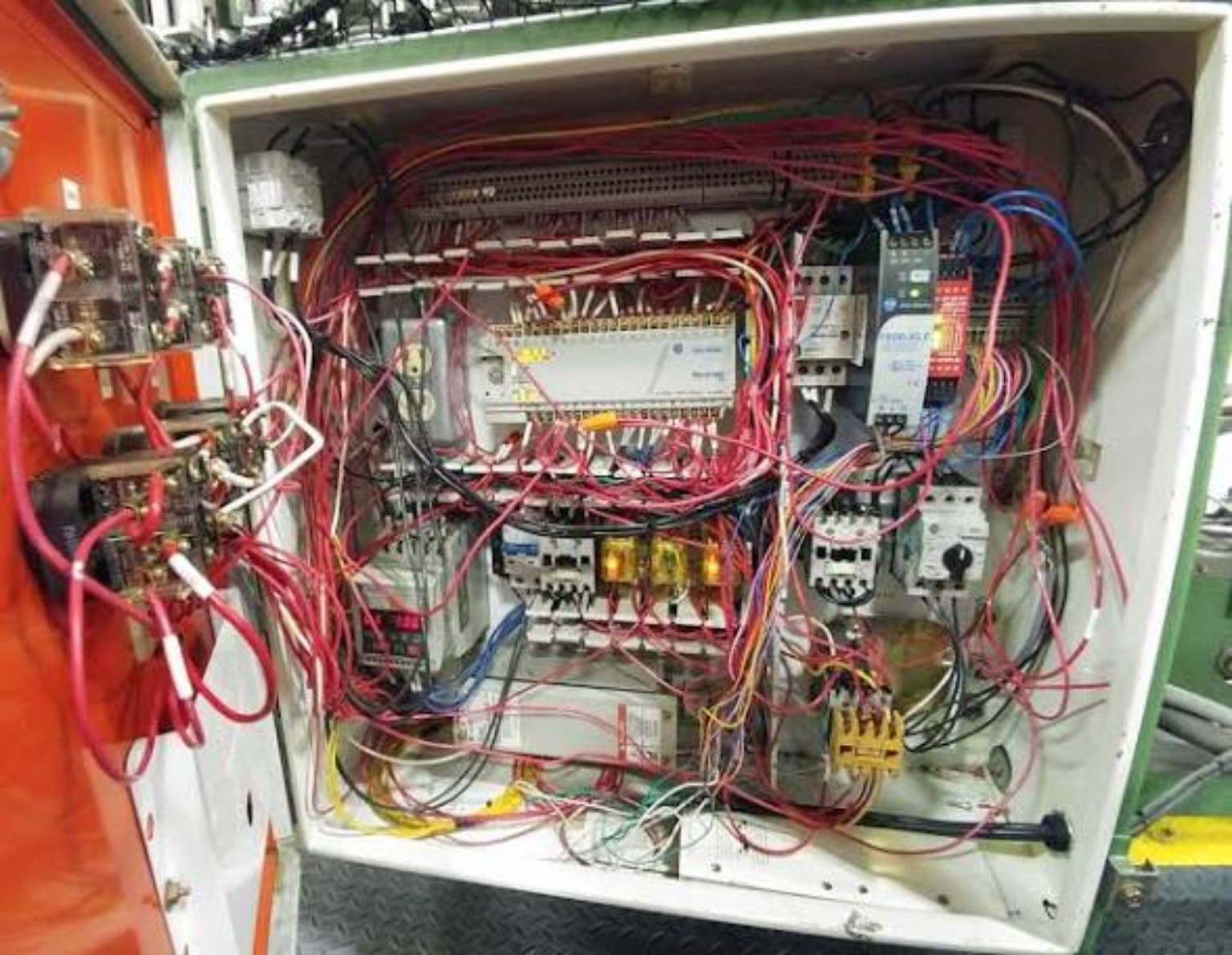
- Wiring that resembles a “spaghetti” arrangement, with poor routing and limited cable traceability.
- Repeated unauthorised alterations or temporary repairs that have become permanent.
- Bypassed safety modules, emergency circuits, protective devices or machine interlocks.
- Obsolete controllers or components that are no longer supported or reasonably replaceable.
- No usable circuit drawings, cable labels, terminal identification or equipment documentation.
- An enclosure that no longer provides suitable protection against dust, water, oil or the surrounding environment.
- Contamination by pests, conductive dust, oil, moisture or corrosive material.
- Extensive rust, heat damage, degraded insulation or damage that is not economically reversible.
- Insufficient space or capacity for the machine’s present control and production requirements.
- Frequent breakdowns where repair costs and lost production continue to increase.
At this stage, continually repairing individual faults may cost more over time than planning a controlled upgrade. A replacement panel can improve maintainability, component availability, diagnostics, operator interaction and readiness for future modifications.
A new panel designed for today’s requirements
A complete history of the machine is not required before JPC can begin an assessment. We inspect the existing equipment, establish how the machine currently operates and discuss what the customer now needs from the process. Available information, operating sequences, safety functions and technical documentation are reviewed where present, while missing details can be investigated during the survey and engineering stages.
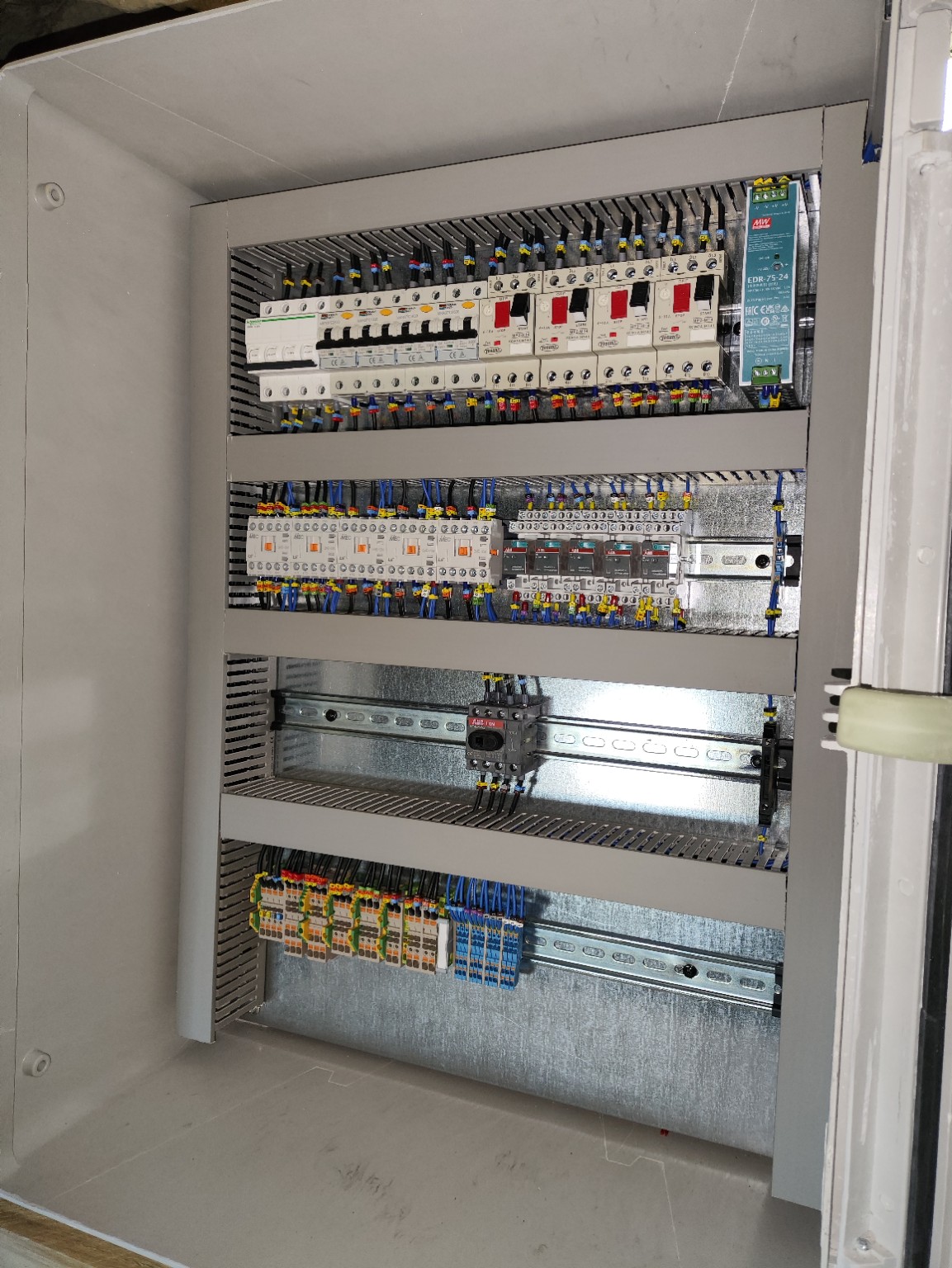
The new control system can then be developed around current requirements rather than simply copying every limitation of the old panel. This may include updated PLC and HMI control, improved fault indication, modern motor drives, clearer operator controls, better cable identification, maintainable layouts and allowance for future expansion.
The panel and associated modifications should be designed with the applicable electrical and machinery-safety requirements in mind. Depending on the project, the wider machine may also require a risk assessment, guarding review or additional mechanical and safety work; replacing the electrical panel alone does not automatically make the complete machine compliant.
From the first inspection to commissioning
JPC offers a free on-site consultation to understand the condition of the equipment and the customer’s operational requirements. We can then present practical options—from targeted servicing or selective upgrades to a complete replacement control system.
Once the preferred solution is agreed, JPC can manage the implementation through component selection and ordering, control-panel design and assembly, PLC and HMI software development, installation, testing and final commissioning. The objective is a dependable, operator-friendly system designed for today’s production needs while remaining ready for tomorrow’s requirements.
Not sure about the condition of your control panel?
Arrange a free on-site consultation with JPC Electrical & Automation Services. We can assess the current installation, explain the available options and recommend the most suitable next step.
Request a consultation